Alignment and pointing
Point it once. Or let it point itself.
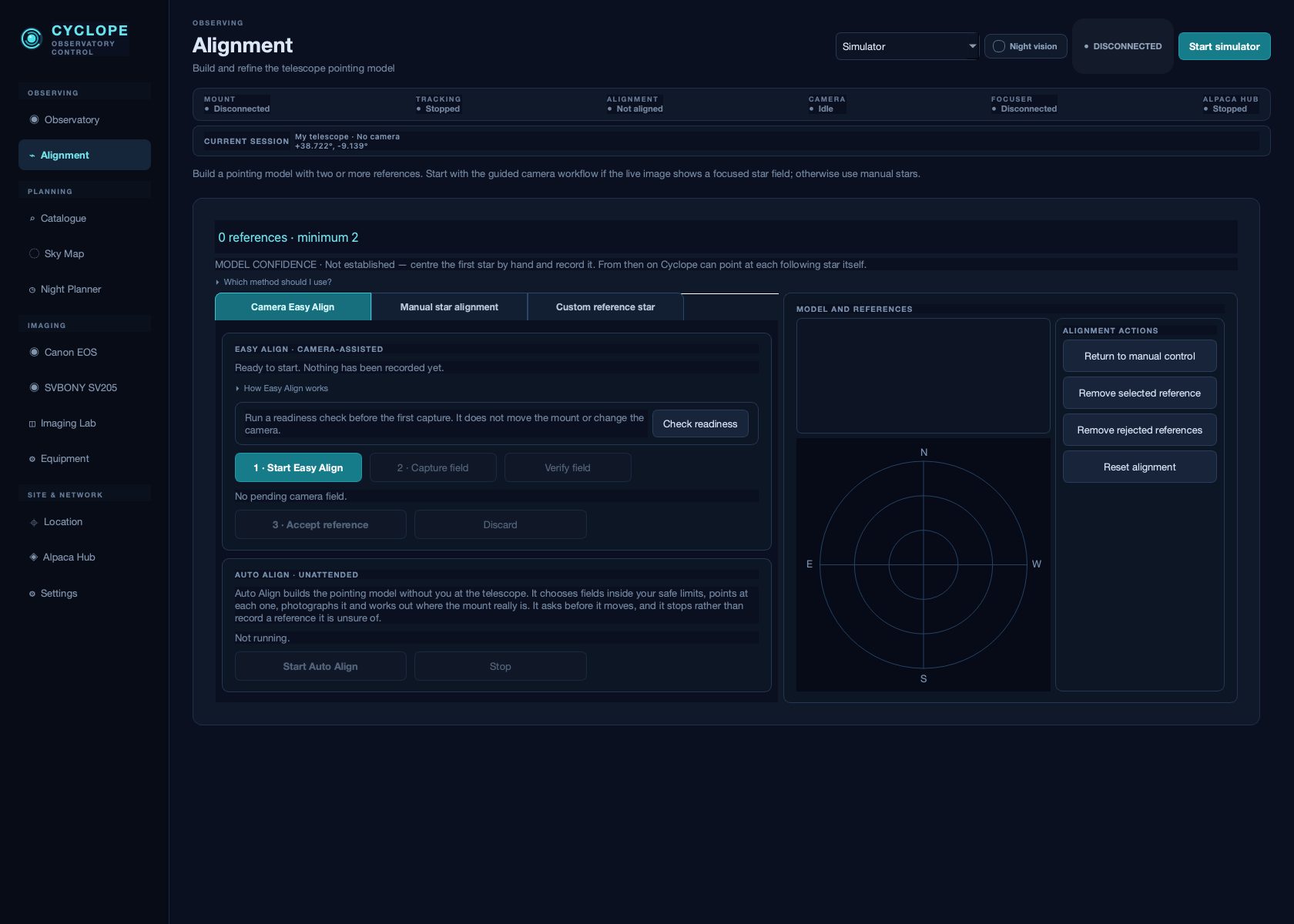
A mount knows where it thinks it is pointing. A pointing model is what closes the gap between that and the sky. Cyclope builds one from two or three stars and shows you the error it is correcting, so you can see whether the model is any good rather than hoping.
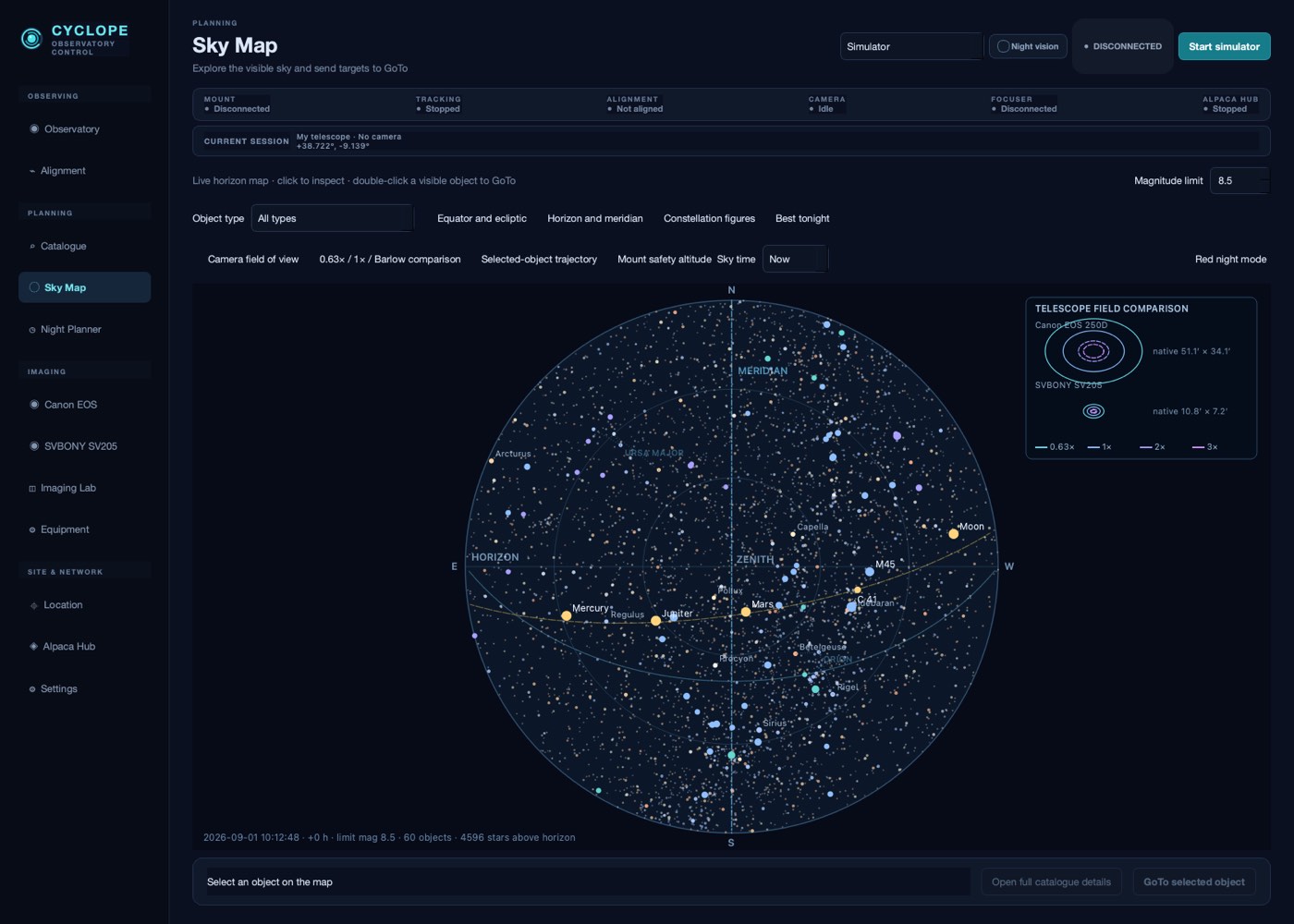
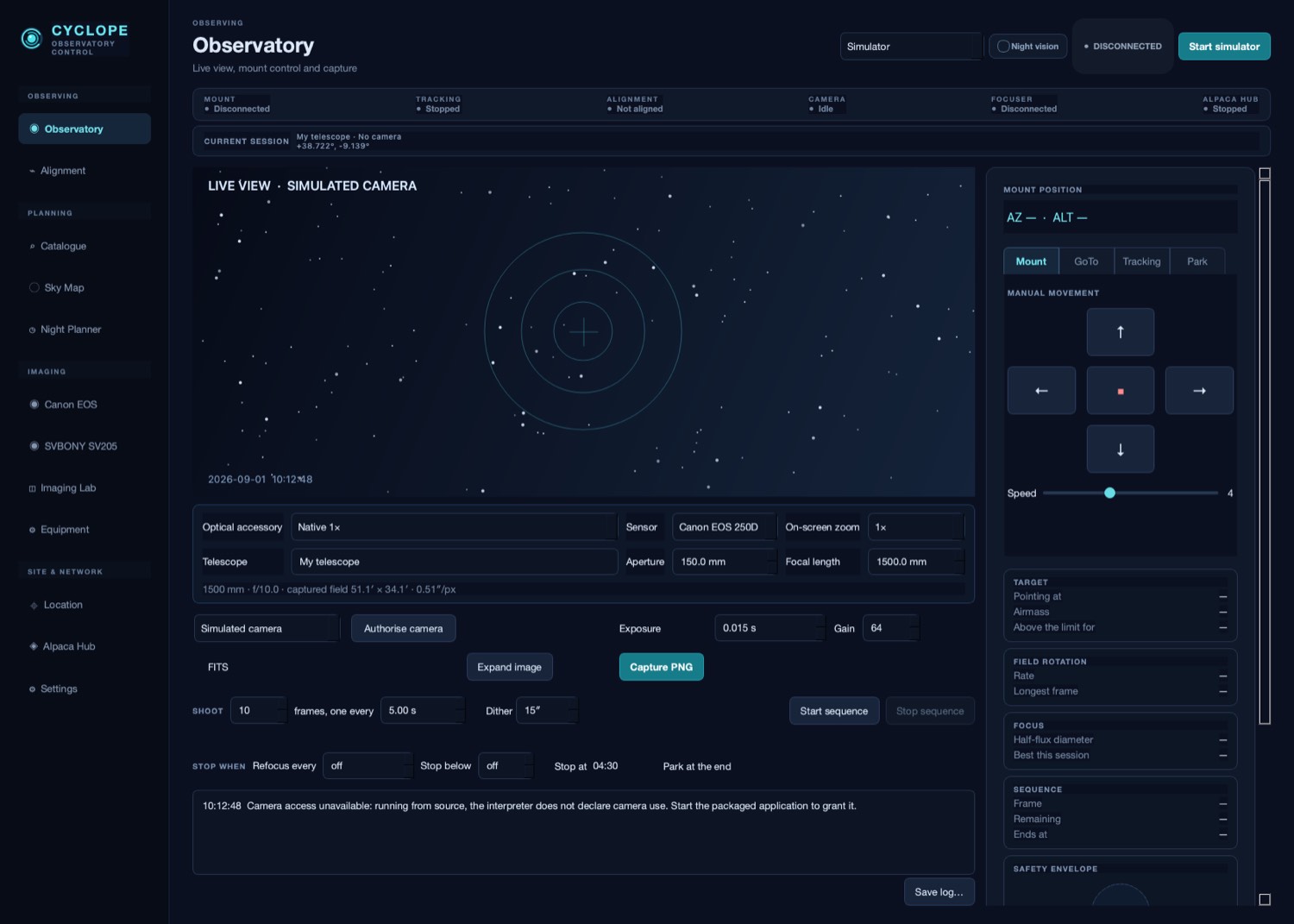
Auto Align builds it for you. Press it and Cyclope chooses a bright field inside the limits you set, points at it, waits for the tube to settle, photographs it and works out exactly where the telescope is looking — then moves to another part of the sky and does it again, until the model stands. You need not identify a single star.
It asks before the first movement and names the field it is going to, because it knows your altitude and azimuth limits but not the wall, the tree or the cable in your garden. One button stops it where it stands. And it will not record a reference it is unsure of: a field that disagrees with the model is left for you to judge rather than quietly accepted while you are indoors.
Rather do it yourself? The guided workflow is still there: point at any star-rich field, photograph it, look at what Cyclope proposes, accept it. Either way the same solving centres a target properly afterwards — the object ends up where you meant it, not near enough.